
Why we love stripy stone
Layering stone can create a fun twist to any home design project. Stone can feel historic or contemporary, dramatic or understated and through playing with stripes its versatility can really be celebrated. Stripes can bring depth and character to any space.
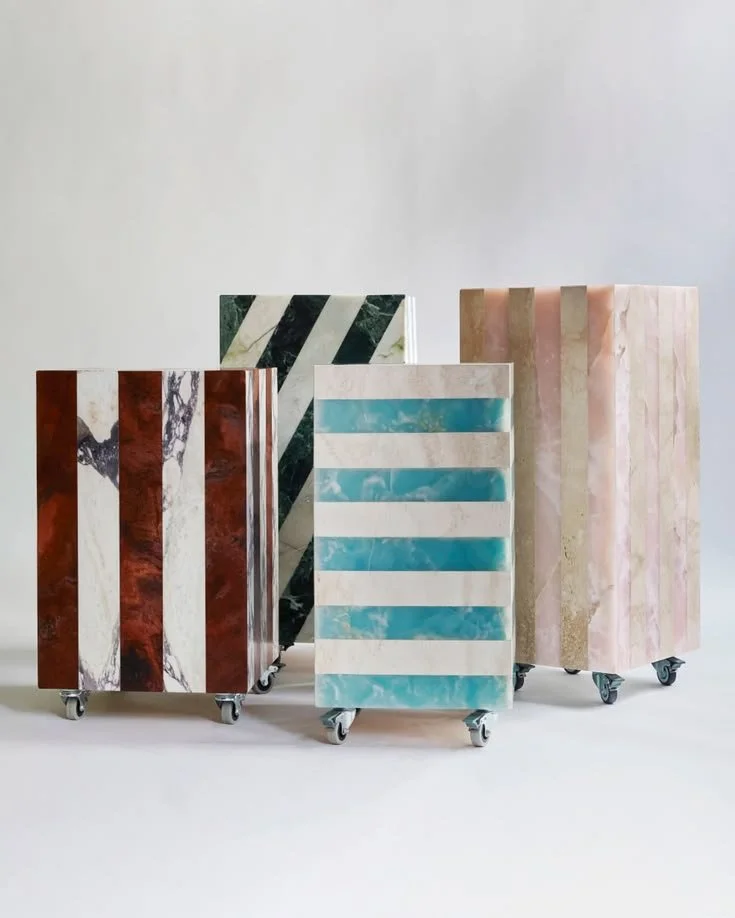
The Breton Cube from Solid Nature.
“There is something so pleasing about the crisp graphic sharpness of stripes. Like every good design or appealing scene, the eye is constantly seeking variation and stimulation.
Our eyes need to wander between and around visual complexity. To deprive ourselves of such, constitutes some of the harshest forms of punishment, notably a barren prison cell devoid of objects and materiality.”
-Anna
STRIPES WITH SPIRITUAL MEANING
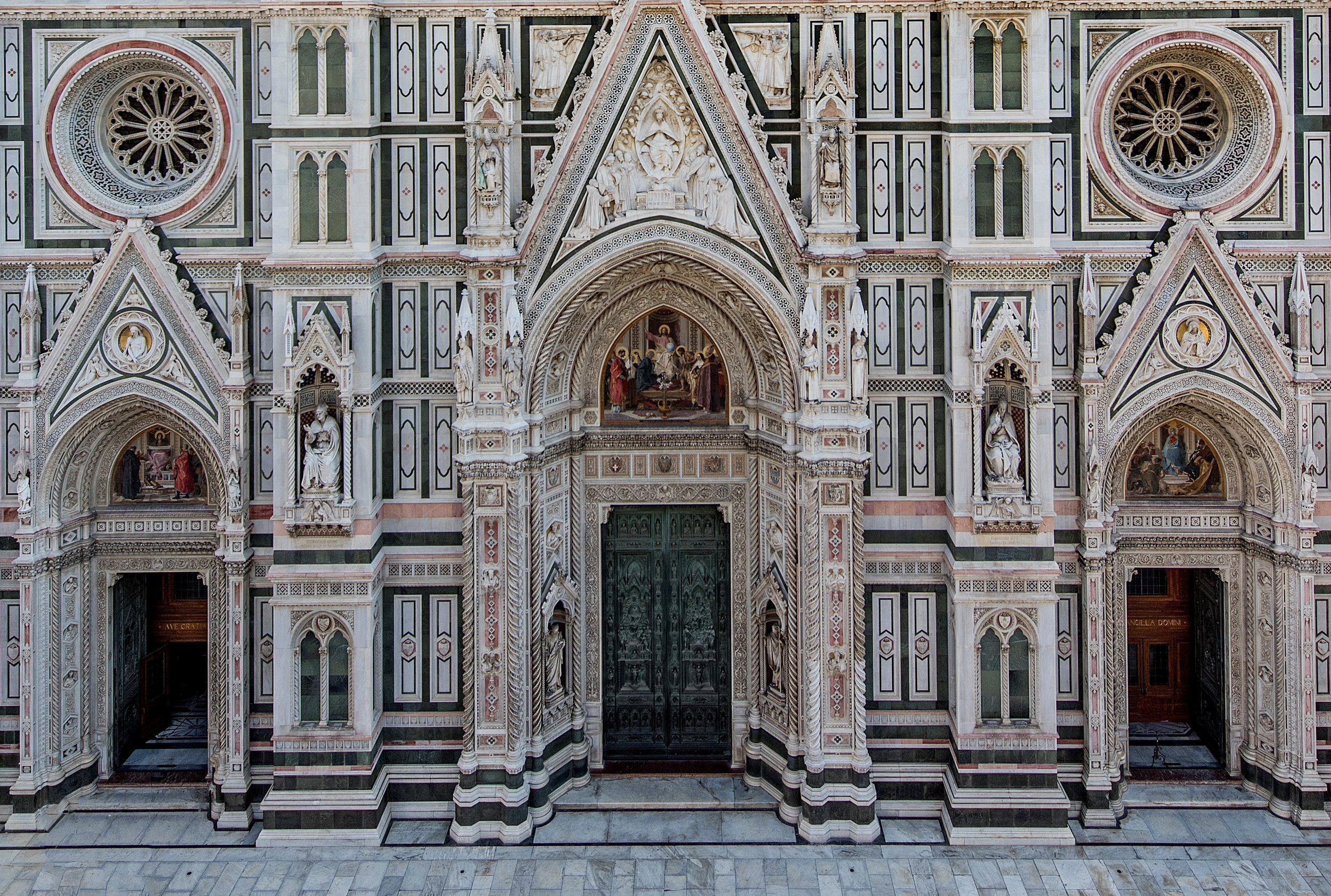
The Cathedral of Santa Maria del Fiore in Florence Italy. Image via Opera Magazine.
Stripes aren’t just decorative, they also carry meaning both culturally and symbolically. Take the Florence Cathedral. One of the largest churches in the world, its stripy marble facade is highly ornate with the exterior using three different stones found across Tuscany. Each stone is chosen for its colour and represents a different aspect of Christian faith. White Carrara Marble signifies purity, green Serpentine marble, known as ‘Verde Prato’ named after the city of Prato where the stone is found, symbolises hope and finally the pinkish red toned marble represents charity.
Each colour paints a map of Tuscany’s towns and its history in stone quarrying, dating back to the Roman Empire, from Carrara (white), Prato (green) and Siena (red). The building is both beautiful and deeply connected to the landscape of Tuscany.
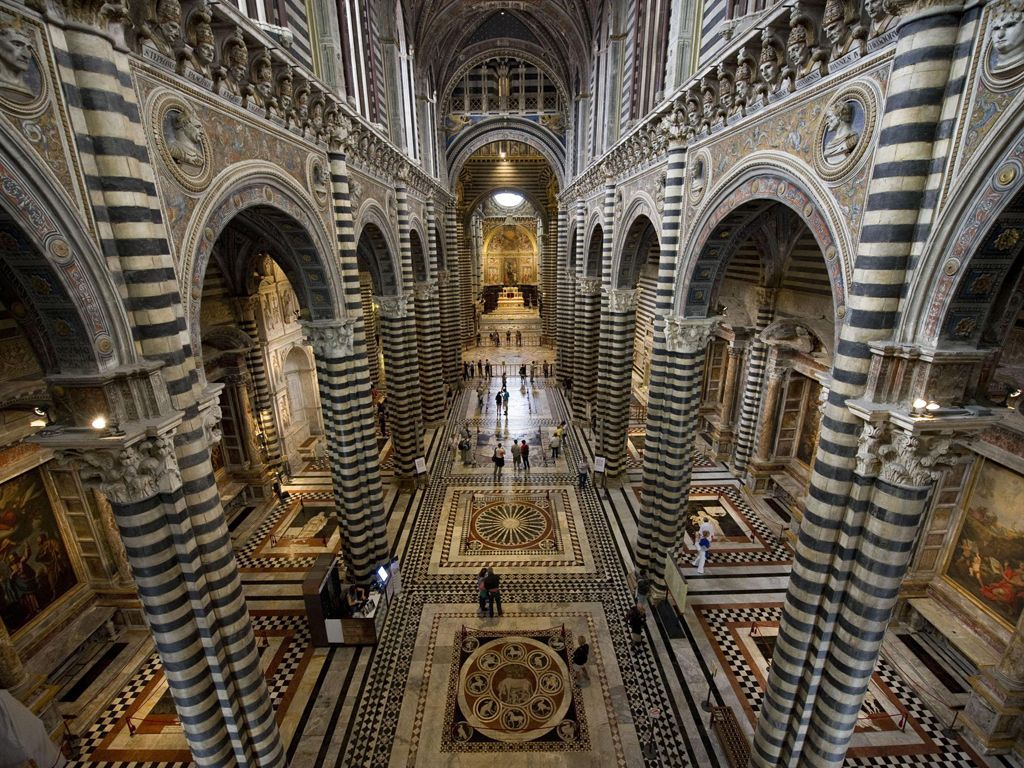
The stripy arches of Siena Cathedral. Image via Conde Naste Traveler.
Another Italian example, black and white horizontal stripes wrap around the interior columns of Siena Cathedral. The stripes soften the upward pull of the arches and columns and create an interesting contrast to the verticality of the cathedral's architecture. Similar to Florence, the colours have spiritual meaning, with black representing humility and again white for purity. They also match the city’s coat of arms.
The beauty of working with stone is it can be used across different scales, from architecture to furniture. One of our favourite furniture pieces is the limited edition Tobi-Ishi table by B&B Italia in collaboration with Barber Osgerby. Made from alternating strips of white Carrara and green Alpi marble, the designers were actually inspired by the striped masonry of Siena Cathedral.
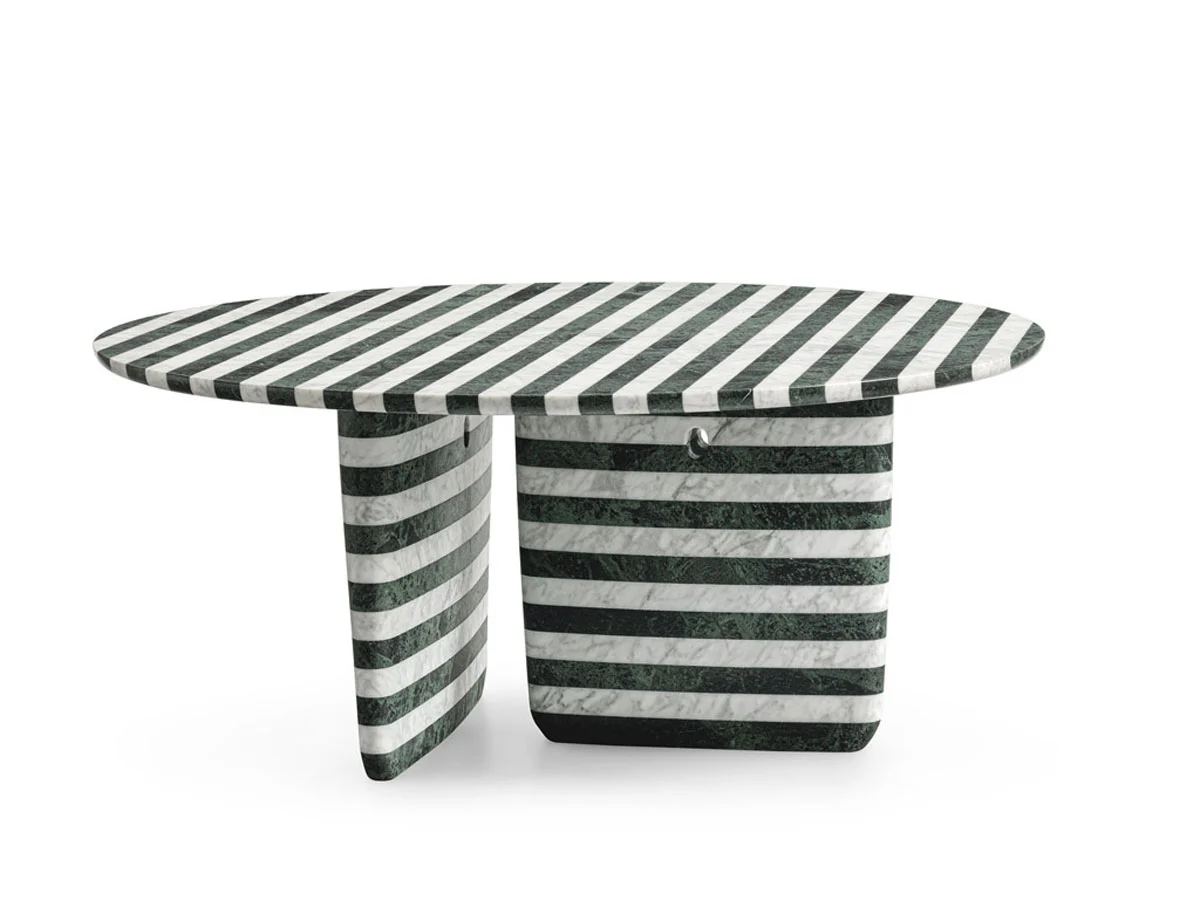
Tobi-Ishi striped marble table from B&B Italia.
In the Middle East, Ablaq is an architectural technique where alternating bands of light and dark stone are used to create bold stripes. The local stone supply encouraged the use of stone in this way. In southern Syria there is abundance of black basalt and white limestone, the supplies of each are about equal and the architecture mirrors this natural balance.
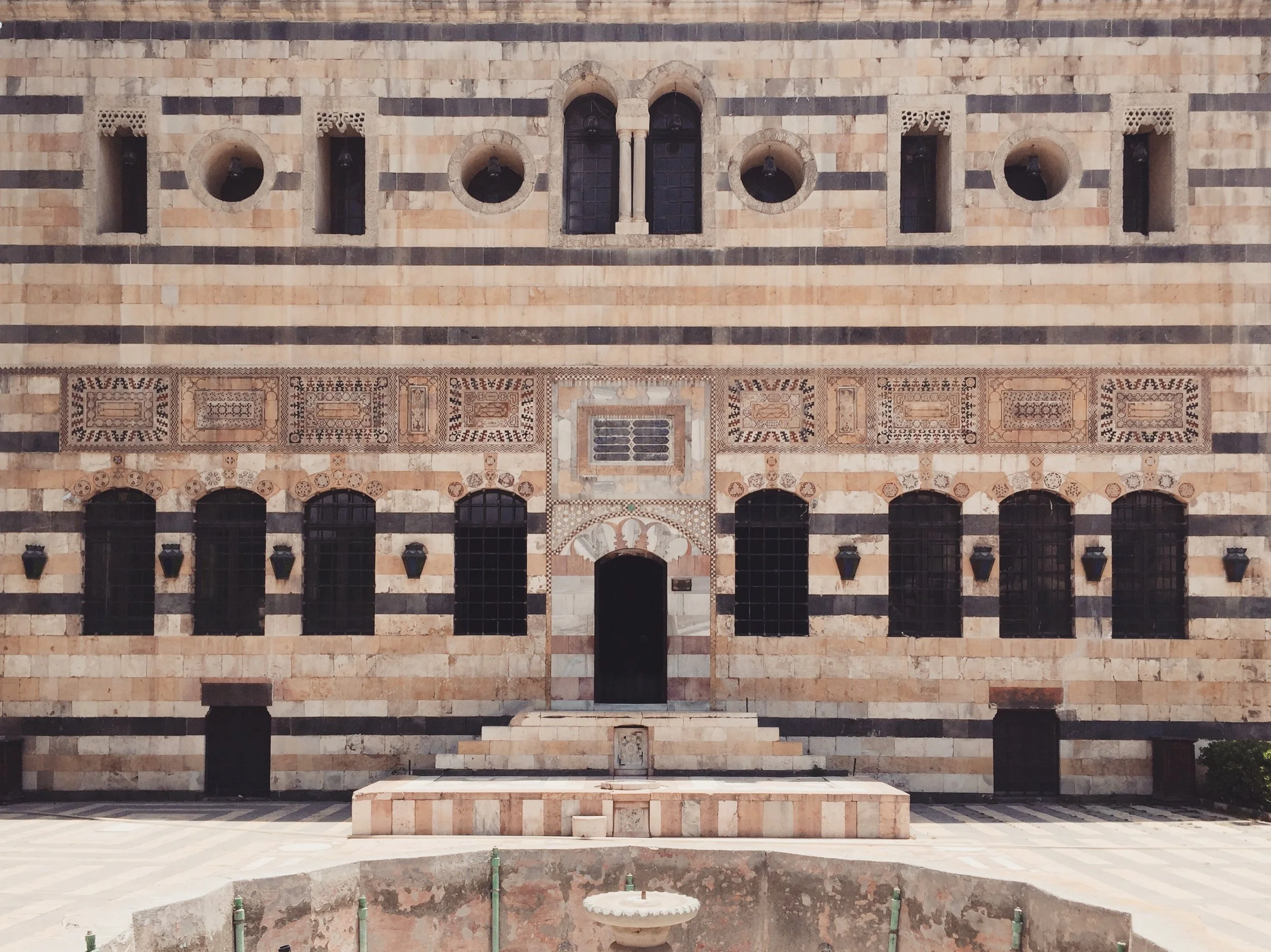
Al-Azm Palace in Damascus, Syria. Photograph by Bassel Khabbaz.
During the Victorian Gothic Revival, polychromatic stonework became a defining architectural feature with architects using multicoloured bricks to create decorative patterns. The popularisation of this technique at this time was in part inspired by the writings of John Ruskin. In ‘The Seven Lamps of Architecture’, Ruskin argued that architecture should celebrate craftsmanship, truth to natural materials and visible construction. These ideas found their way across Britain’s Victorian buildings like the Oxford University Museum of Natural History.
There was also a practical side to Victorian Britain’s love affair with stripes. The Brick Tax was repealed in 1850 and with that the cost of bricks fell dramatically making coloured bricks more widely available. Builders and architects were free to experiment with patterns and banding that would previously have been prohibitively expensive.
In industrial cities, amid the smoke and soot, the contrasting bands of colour helped buildings stand out. The stripes helped give identity and presence to architecture in an increasingly crowded cityscape. It’s a wonderful reminder that some of the most enduring design ideas emerge from a blend of aesthetics and practicality.
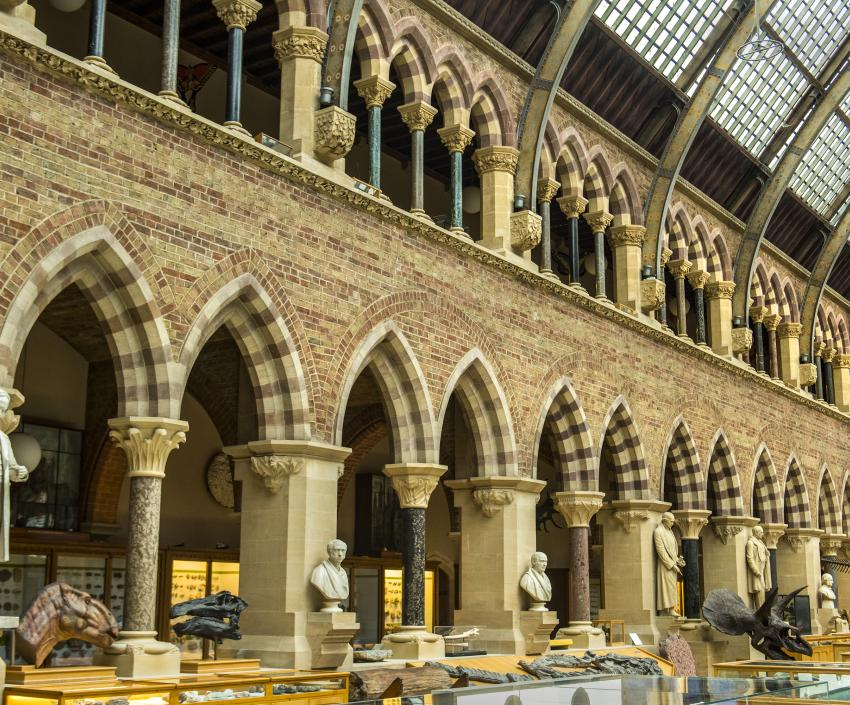
The interior of the Oxford University Museum of Natural History. Image via Oxford Preservation Trust.
STRIPED STONE IN CONTEMPORARY INTERIORS
Contemporary designers are also adopting stripes in more playful ways. This bar is clad in multi-coloured strips of onyx to create a focal point for the room. Rather than relying on colour or pattern alone, we can also use layering techniques to bring a 3D textural quality. Onyx has a translucent quality and as light passes through the stone the stripes take on a luminous quality, giving the object an added depth.
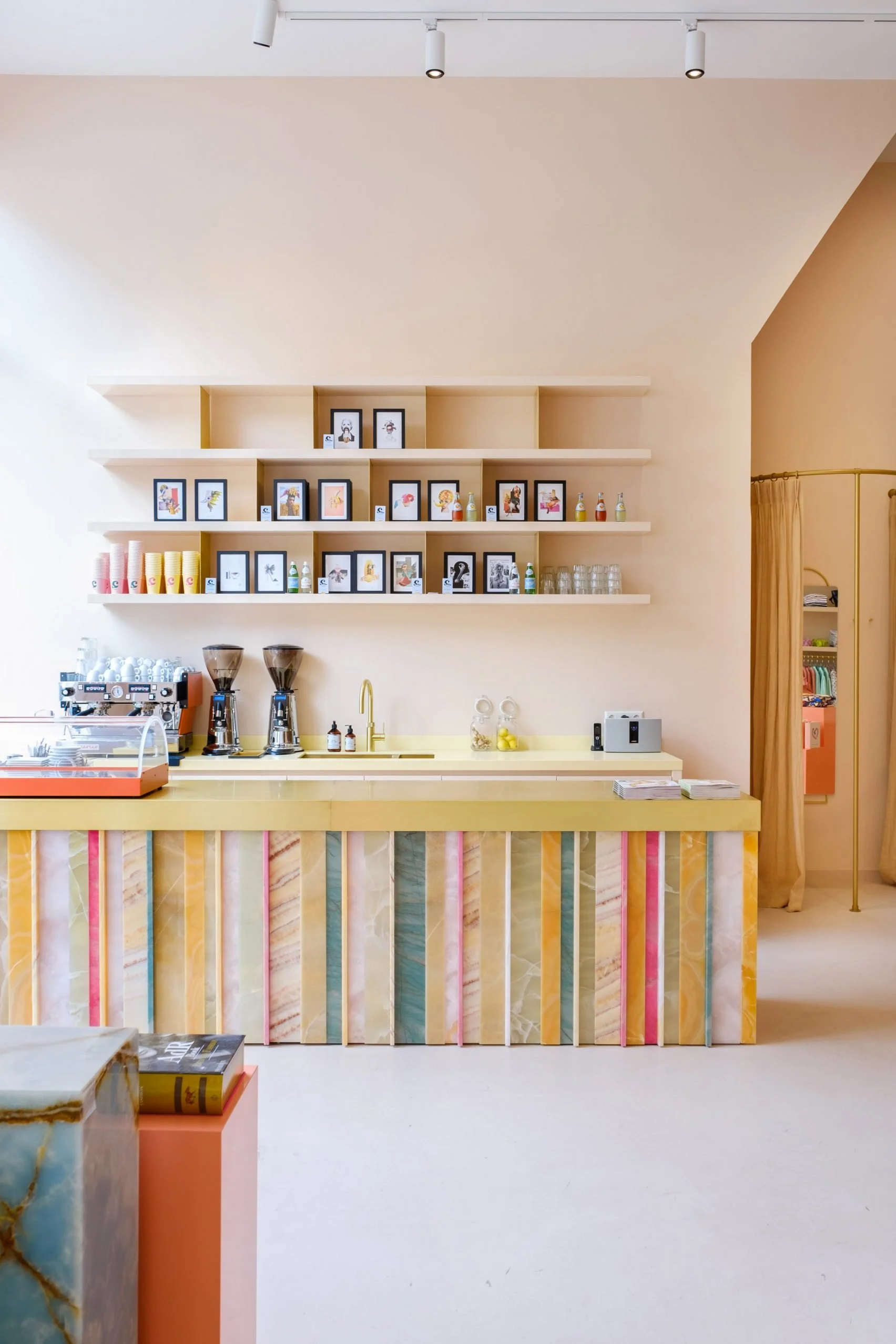
Office interiors, Amsterdam by Anna Claus Interiors. Photograph by Thibault De Schepper.
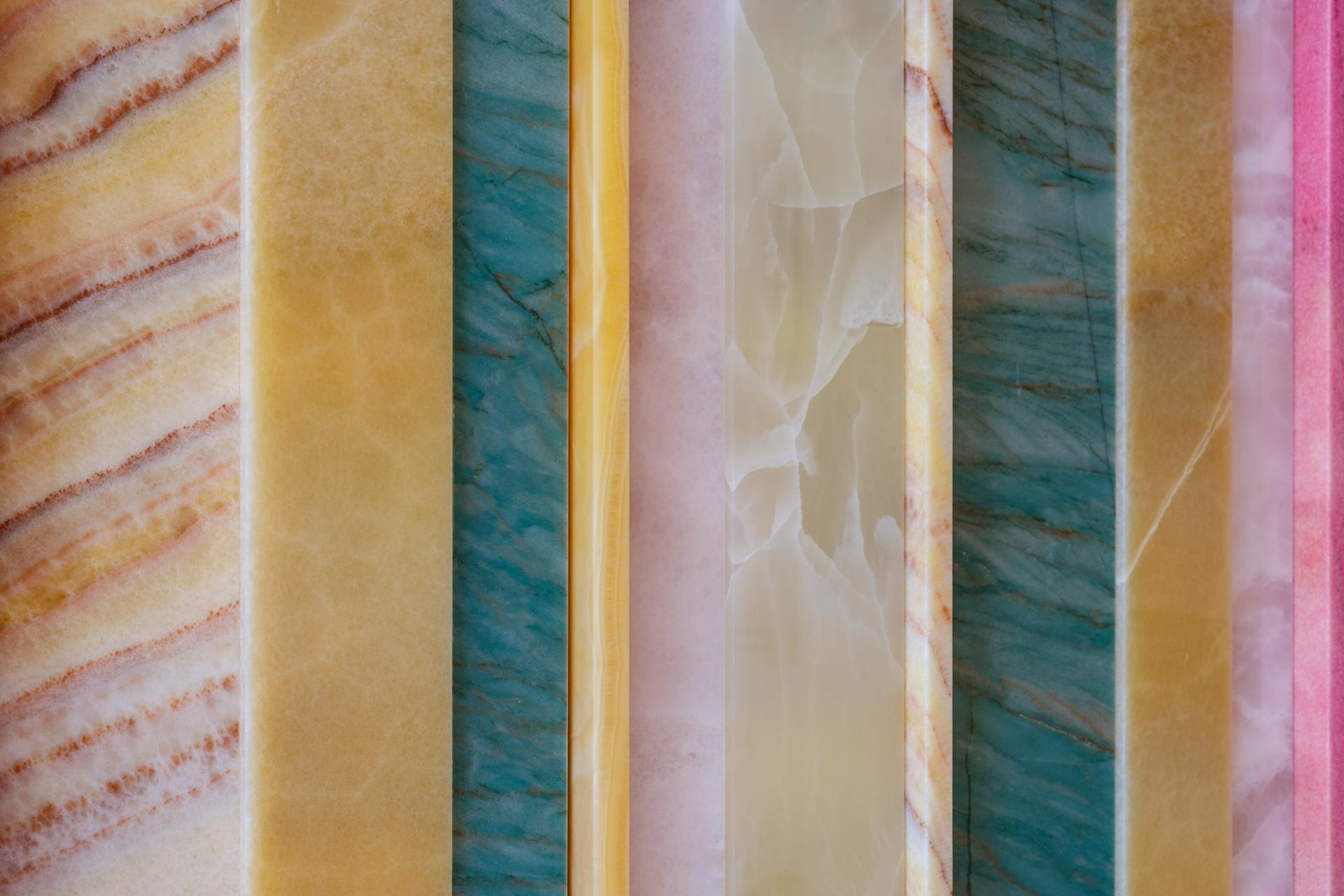
Layers of colourful quartz stone. Photograph by Thibault De Schepper.
Soho Home’s Charli Table combines both marble and onyx in a contrast of colours and directions. The interplay of all the different tones, patterns and textures result in something that feels closer to a piece of art than conventional furniture.
Using stone in this way feels especially relevant today as it offers a creative and playful way to embrace material diversity. As we look for ways to reuse, repurpose and make better use of available materials, combining different stones is becoming increasingly appealing. Different offcuts could be brought together to create something that feels layered, full of character and more sustainable.
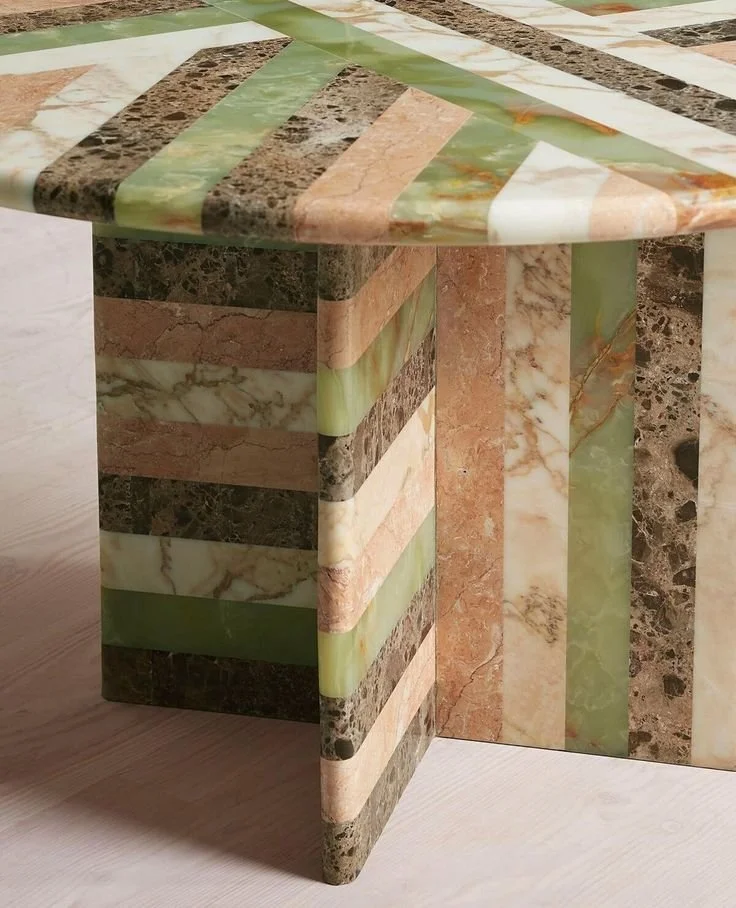
The Charli Dining Table by Soho Home.
NATURAL STONES
Natural stripes in stone tell a story about its geology. The striped patterns found in natural stone come from the alternating layers of sediments and mineral deposits compressing over time into hard rock. The quarried stones can then be ‘vein cut’ which is when the stone is cut parallel to the layers of sediment exposing the layers as long striations.
The linear quality of vein cut stones can make your space feel more expansive. The stripes guide your eye through the room whilst remaining subtle and timeless. It’s a material that appeals to clients who are drawn to natural textures rather than making a statement through bold colour.
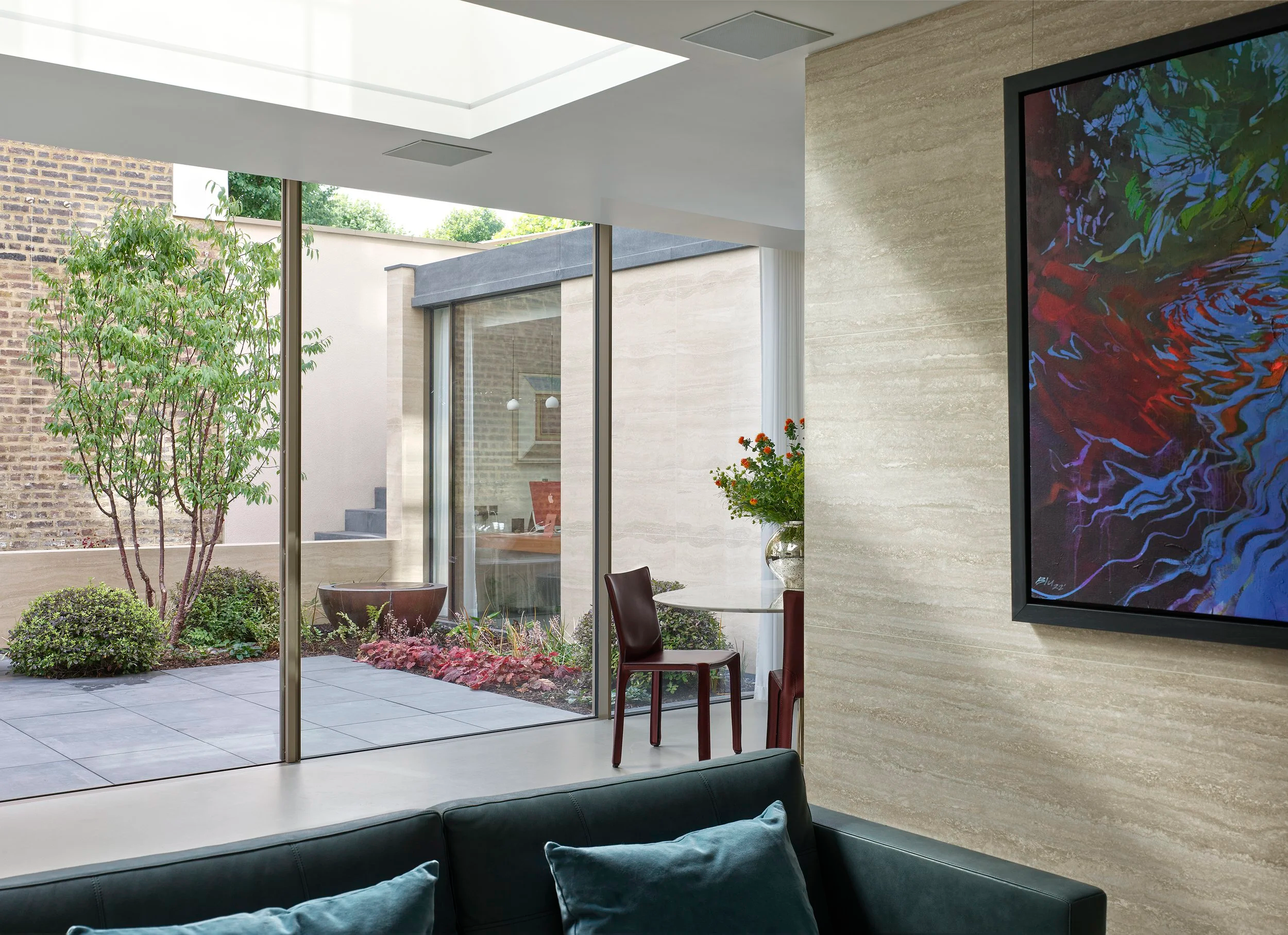
We used Italian travertine in our ‘Corner Villa’ project, defining the space with subtle patter.
“Interestingly, I feel stripes provide visual complexity but also a satisfying simplicity and coherence. There is a reliability in the pattern that I think appeals to someone who likes restraint but doesn’t want to be boring.”
- Amelia
HOW TO USE STRIPED STONE IN YOUR HOME PROJECT
For homeowners, striped stone can be used in so many different ways. A patterned floor can establish the character of a room as soon as you enter for those looking to make a statement. This beautifully detailed kitchen floor takes a geometric mosaic pattern with alternating stones framed by wooden inlays. The wood brings warmth and softens the contrast whilst adding a layer of craftsmanship.
It’s important to find the right balance, some people are drawn to bold graphic contrasts whilst others prefer the quieter beauty of naturally occurring stripes found in vein cut stone. Both approaches can be effective when we use it thoughtfully in response to the design language of the home.
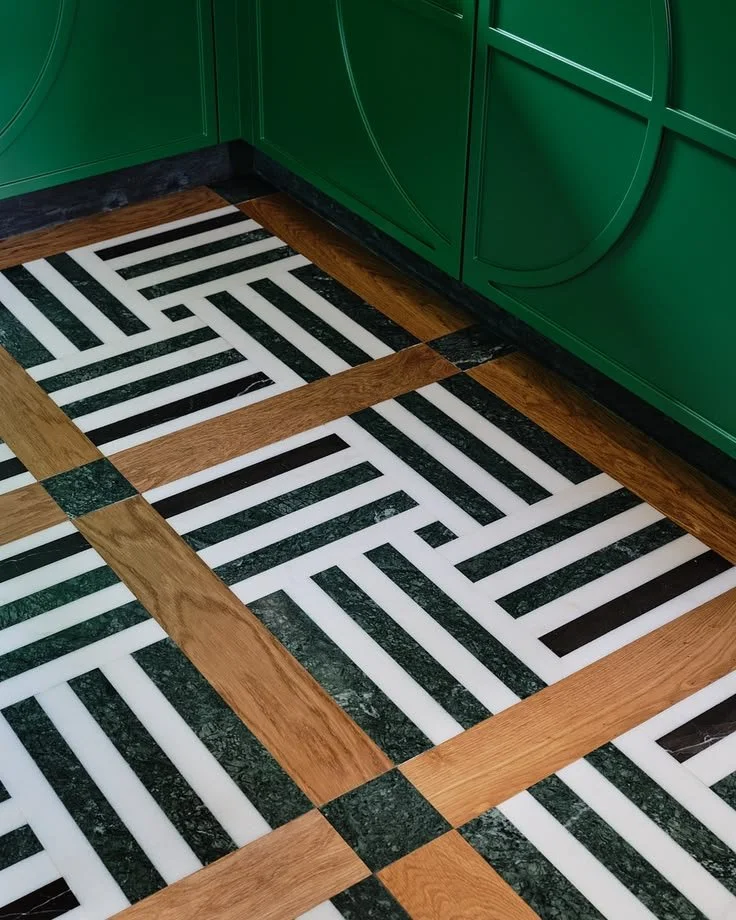
Lilium White and Satin Verde marble from Solid Nature used to create fun kitchen floor designed by Roelfien Vos.
The beauty of stripey stone is its versatility, whether formed over millions of years by geology or carefully composed by a designer, stripes have the ability to bring depth, character and a space that tells a story.
“Striped stone is a visual representation of man's dominance over nature, testament to our ability to reshape and redefine even the most ancient elements of our world.
- says our Design Director Anna
The meeting of these two languages, one of ancient geological complexity and the language of simple graphic form, creates a wonderful excitement to our eye.”
We'd like to thank Deluco for partnering with us on this piece. Explore their range of natural stone at Deluco.